If you're shopping for a home Bitcoin solo miner in Australia in 2026, two machines keep coming up: the Lucky Miner LV08 and the NerdQX 8 TH/s. Both are low-power, Wi-Fi enabled SHA-256 miners designed for home use. Both are aimed at the solo mining market — running independently rather than contributing to a pool. And both are available in Australia right now.
But they're built on different philosophies, with meaningfully different specs, user experiences, and use cases. This comparison lays out the key differences so you can make a clear decision.
The Quick Specs Comparison
| Lucky Miner LV08 | NerdQX 8 TH/s | |
|---|---|---|
| Algorithm | SHA-256 | SHA-256 |
| Hashrate | 4.2 TH/s (±5%) | 8 TH/s (overclockable) |
| Power draw | ~120W (±10%) | ~180W at 8 TH/s |
| Efficiency | ~28.6 J/TH | ~22.5 J/TH |
| ASIC chip | BM1368 | 4× BM1370 |
| Connectivity | 2.4GHz Wi-Fi | 2.4GHz Wi-Fi |
| Display | Built-in digital screen | LILYGO LCD (live stats) |
| Firmware | Proprietary Lucky Miner firmware | Open-source AxeOS / NerdOS |
| PSU included | Yes (100–240V AC) | Yes (12.4V 20A, UL-certified) |
| Form factor | Compact desktop, closed case | Open board / semi-exposed PCB |
| Noise level | Near-silent | Quiet — laptop fan levels at stock |
| Mining mode | Solo or pool | Solo or pool |
| Supported coins | BTC, BCH, BSV, and other SHA-256 | BTC and SHA-256 coins |
Monthly Electricity Cost at Australian Rates
This is the number that matters most for Australian home miners. At a typical residential rate of $0.30/kWh:
- Lucky Miner LV08 (120W): approximately $26 per month running 24/7
- NerdQX 8 TH/s (180W): approximately $39 per month running 24/7
Both are manageable for home budgets. The LV08 is cheaper to run, but the NerdQX delivers significantly more hashrate per dollar of operating cost once you factor in that its efficiency (J/TH) is meaningfully better. More on that below.
For a full breakdown of how Australian electricity rates interact with mining economics, see: Electricity Prices in Australia and the Real Cost of Crypto Mining in 2026
Hashrate and Efficiency: Where the NerdQX Pulls Ahead
The NerdQX 8 TH/s runs four Bitmain BM1370 chips — the same chip architecture used in the Antminer S21 Pro, one of the most efficient commercial Bitcoin miners available. At stock settings it delivers 8 TH/s at roughly 180W, giving an efficiency of approximately 22.5 J/TH.
The Lucky Miner LV08 uses the BM1368 chip — a generation older than the BM1370 — and runs at 4.2 TH/s with 120W power draw, putting it at approximately 28.6 J/TH.
In practical terms: the NerdQX gives you roughly twice the hashrate for about 50% more electricity cost. For solo mining, higher hashrate means statistically better odds of finding a block over time, for a comparatively modest increase in operating cost. The NerdQX is the more efficient machine in terms of hashes per watt of electricity spent.
The NerdQX also has meaningful overclocking headroom — with the unlocked firmware and its dedicated VREG heatsink and Arctic cooling fans, it can push past 8 TH/s. The LV08 has no official overclocking capability.
Firmware and Configurability
This is where the two machines diverge most fundamentally.
The Lucky Miner LV08 runs Lucky Miner's proprietary firmware. It's polished, stable, and genuinely plug-and-play. Configuration is done through a simple web interface — connect to Wi-Fi, enter your pool address and wallet, done. There's no tinkering required, and no tinkering possible. If you want a miner that works out of the box without any technical engagement, the LV08 delivers exactly that.
The NerdQX runs open-source AxeOS firmware (with newer revisions running NerdOS, a dedicated fork of AxeOS tuned for the NerdQX hardware). Every hardware schematic, PCB design, and firmware file is publicly available. You can adjust core frequency, voltage, pool configuration, fan control, and temperature targets through the browser interface. Firmware updates are released regularly by the open-source community and typically bring hashrate or efficiency improvements.
For users who want transparency, customisation, and the ability to tune their hardware over time — the NerdQX's open-source ecosystem is a genuine advantage. For users who just want to plug it in and forget about it — the LV08 is the simpler choice.
Build Quality and Form Factor
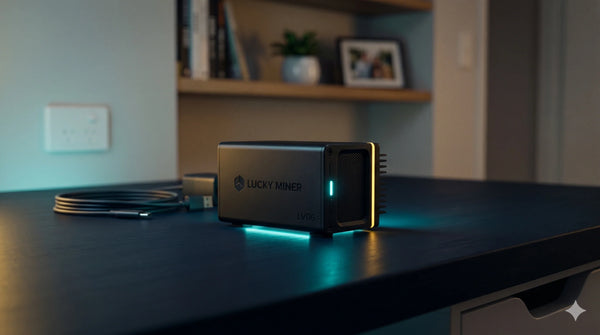
The Lucky Miner LV08 ships in a fully enclosed compact case — polished aluminium alloy finish, built-in digital display, quiet fan, and a footprint small enough to sit on a bookshelf or next to a TV. It looks and feels like a consumer appliance. It's compact enough to tuck away out of sight, and quiet enough that you'll forget it's running.
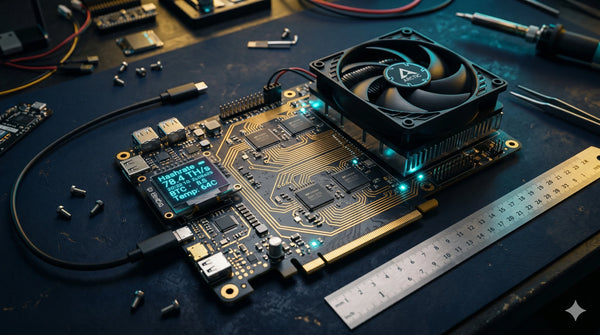
The NerdQX is a more serious piece of hardware. It's an open-board design — the PCB, BM1370 chips, VREG heatsink, and Arctic cooling fans are all visible. It's designed for miners who appreciate what's under the hood. The LILYGO LCD display shows live hashrate, Bitcoin price, ASIC temperature, and network stats in real time. Build quality is high — dedicated VREG heatsink (which is what kills multi-chip boards when it's absent), UL-certified PSU, premium fan bearings, and a UL-rated power supply rated to 20A. It's also liquid-cooling ready for those who want to go further.
The LV08 is the prettier machine for a living space. The NerdQX is the more capable one for anyone who takes their home mining setup seriously.
Solo Mining: What the Odds Actually Look Like
Both machines are primarily intended for solo mining — connecting to a solo Bitcoin pool and attempting to find blocks without pooling hashrate with other miners. The prize if you succeed is the full Bitcoin block reward: currently 3.125 BTC plus transaction fees.
To put the odds in context:
- The Bitcoin network is currently running at approximately 800–1,000 EH/s of total hashrate.
- The LV08 at 4.2 TH/s contributes roughly 0.0000000042% of that total.
- The NerdQX at 8 TH/s contributes roughly 0.0000000080% — about twice as much.
Neither machine is going to find a block every week. Solo mining at this scale is genuinely a lottery — the reward is large and real, the probability on any given day is very small, and the cost to keep playing is low. Several Bitaxe-class open-source miners have found real Bitcoin blocks. It happens. But it requires patience measured in months and years, not days.
Both machines can also connect to standard mining pools, where you'll earn micro-payouts proportional to your contributed hashrate. At 4–8 TH/s these payouts are tiny but consistent — useful for those who want some feedback that the machine is working, even if the amounts are small.
For a full breakdown of the solo vs pool decision, read: Mining Pool vs Solo Mining: Which Is Best for Beginners?
Setup and Ease of Use
Lucky Miner LV08: Plug in the included PSU, connect to the LV08's Wi-Fi hotspot, open the web interface, enter your home Wi-Fi credentials, pool URL, and Bitcoin wallet address. That's the full setup. You can monitor the machine from any browser on your network. No command line, no firmware flashing, no configuration files. Genuinely beginner-friendly.
NerdQX: Also configured via browser interface through AxeOS / NerdOS. Initial setup is similar — connect to Wi-Fi, configure pool and wallet. The difference is depth: once set up, AxeOS exposes frequency controls, voltage tuning, temperature targets, and fan curve settings. These are optional — you can leave everything at stock and it will run fine — but they're there for those who want them. Firmware updates are applied through the web interface. The learning curve is gentle unless you choose to dig into overclocking.
For a step-by-step guide to setting up your first Bitcoin miner, see: How to Set Up Your First Bitcoin Miner in Australia
Who Should Buy the Lucky Miner LV08?
The LV08 is the right choice if:
- You want a genuinely plug-and-play experience with no technical setup beyond basic Wi-Fi configuration.
- Aesthetics matter — you want something that looks like a consumer product and can sit unobtrusively in a living space.
- You're new to solo mining and want the simplest possible entry point.
- Lower absolute electricity cost (120W vs 180W) is a priority.
- You're not interested in tinkering with firmware or overclocking.
View the Lucky Miner LV08 at MinerHub
Who Should Buy the NerdQX?
The NerdQX is the right choice if:
- You want the most hashrate per dollar of monthly operating cost in this power class.
- You're comfortable with (or interested in) open-source hardware and firmware.
- You want the ability to overclock, tune, and update firmware over time.
- You appreciate knowing exactly what chip is inside your hardware and how the PCB is designed.
- You want the highest solo mining odds of the two options at home-friendly power levels.
View the NerdQX 8 TH/s at MinerHub
The Verdict
On raw performance metrics, the NerdQX wins: better chip generation (BM1370 vs BM1368), roughly twice the hashrate, better J/TH efficiency, and a more capable open-source firmware ecosystem. If you're choosing purely on hashes-per-dollar-of-electricity, the NerdQX is the stronger machine.
But "better on paper" isn't always the right framework. The Lucky Miner LV08 is a more polished, more beginner-friendly product that requires zero technical engagement beyond initial setup. For someone who wants to participate in Bitcoin mining without any friction, and who values a compact, unobtrusive form factor, the LV08 is genuinely excellent at what it does.
Both are realistic home options at Australian electricity rates. Neither will generate significant income — that's not what these machines are designed for. They're participation machines: low-cost, low-power ways to engage with Bitcoin's proof-of-work network, accumulate block-finding probability over time, and learn the fundamentals of how mining actually works.
For context on how these machines fit into the broader home mining landscape, see our guide: Home Mining in Australia: What Electricity Rate Makes It Profitable?
Or browse the full Bitcoin Miners collection to see all SHA-256 options currently available for Australian delivery — from compact solo miners through to full commercial-grade ASICs.
Questions? Get in touch with us — we're based in Perth and happy to help you work out which machine suits your setup.