If you've spent more than five minutes researching Bitcoin mining, you've heard the word "halving." It gets thrown around like some kind of mythical event — half dread, half hype. But if you're running a miner at home, the halving isn't abstract. It hits your wallet directly, and understanding exactly how it works is the difference between planning ahead and getting blindsided.
Here's what the halving actually is, why Satoshi built it into Bitcoin's code, and — most importantly — what it means for your mining income in practical, dollar terms.
What Is the Bitcoin Halving?
Every 210,000 blocks (roughly every four years), the Bitcoin network automatically cuts the block reward in half. When Bitcoin launched in 2009, miners earned 50 BTC for every block they solved. After the first halving in 2012, that dropped to 25 BTC. Then 12.5 BTC in 2016, and 6.25 BTC in 2020. The most recent halving in April 2024 brought the reward down to 3.125 BTC per block.
This isn't a decision anyone makes. It's hardcoded into Bitcoin's protocol. No committee votes on it, no government approves it. Every node on the network enforces it automatically. It will keep happening until roughly the year 2140, when the last fraction of a Bitcoin is mined and the block reward drops to zero.
Why Does the Halving Exist?
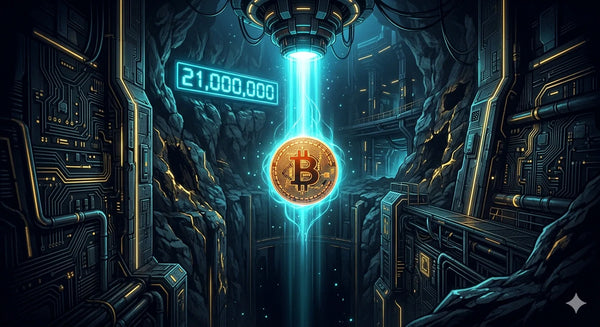
The halving is Bitcoin's monetary policy. Traditional currencies can be printed in unlimited quantities — central banks expand the money supply whenever they see fit. Bitcoin takes the opposite approach: there will only ever be 21 million BTC, and the halving is the mechanism that controls how quickly those coins enter circulation.
By cutting the issuance rate in half every four years, Bitcoin creates a predictable, declining supply schedule. Early on, lots of coins entered the market to incentivise miners to build the network. As the network matured, the flow slows down. This predictable scarcity is a core part of Bitcoin's value proposition — and it's also why the halving matters so much to miners.
How the Halving Directly Impacts Your Mining Revenue
Let's make this concrete. If you're running a Bitmain Antminer S21 at 151 TH/s, your share of every block reward is proportional to your hashrate relative to the total network hashrate. The halving doesn't change your hashrate — your machine keeps hashing at the same speed. What changes is the size of the pie you're sharing.
The day before a halving, the network distributes 6.25 BTC per block (using the 2024 halving as an example). The day after, it distributes 3.125 BTC. Your miner does the exact same work, uses the exact same electricity, and earns exactly half the BTC it earned the day before.
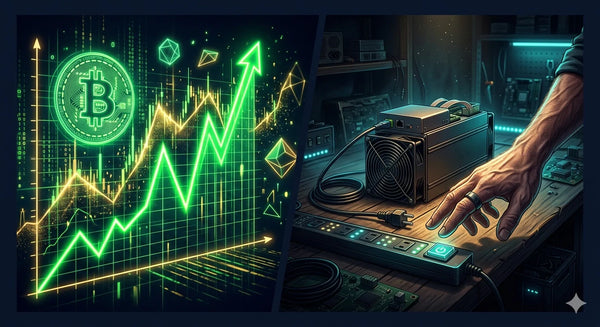
In pure BTC terms, your income drops 50% overnight. Whether that translates to a 50% drop in AUD income depends on what happens to the price — which we'll get to.
The Price Question
Historically, Bitcoin's price has risen significantly in the 12–18 months following each halving. The reduced supply of new coins entering the market, combined with steady or growing demand, has pushed the price upward. After the 2012 halving, BTC went from around $12 to over $1,000 within a year. After 2016, it climbed from $650 to nearly $20,000. After 2020, from $8,700 to $69,000.
But here's the critical caveat: past performance doesn't guarantee future results. Each halving cycle has played out differently, and the market has matured enormously since 2012. Institutional investors, ETFs, and regulatory environments all create dynamics that didn't exist in earlier cycles.
For Australian home miners, the practical lesson is this: don't count on price appreciation to bail out your mining operation. Plan your costs around current prices, and treat any price increase as a bonus. If you're only profitable at a BTC price 50% higher than today, you're speculating, not mining sustainably. Our electricity breakeven guide can help you work out exactly where your threshold sits.
What Happens to Mining Difficulty After a Halving?
When revenue drops 50%, some miners become unprofitable — particularly older machines with poor energy efficiency. Those operators shut down, which reduces the total network hashrate. When hashrate drops, Bitcoin's difficulty adjustment kicks in (every 2,016 blocks, roughly two weeks) and lowers the difficulty to match the remaining hashrate.
Lower difficulty means the miners who stay online find blocks more frequently relative to their hashrate. This partially offsets the halving's impact. In practice, the most efficient miners — those with the lowest joules-per-terahash ratios — survive and absorb the share that unprofitable miners left behind.
This is why efficiency (J/TH) matters more than raw hashrate for long-term mining. A machine that costs less to run per terahash survives difficulty adjustments and halvings that kill less efficient units.
Which Miners Survive a Halving?
Survival comes down to one number: your cost to produce one Bitcoin versus the market price of one Bitcoin. Your cost is determined by your electricity rate, your miner's power consumption, and its hashrate.
In Australia, where electricity rates typically range from $0.25–$0.38/kWh depending on which state you're in, efficiency is everything. A miner running at 15 J/TH (like the Antminer S21 Pro) will survive a halving that kills a miner running at 38 J/TH (like the older A1246-class units).
Here's a rough framework for thinking about halving survival at Australian power rates:
- Under 20 J/TH — Current-gen efficiency. Best positioned to remain profitable through the next halving. Examples: Antminer S21 (17.5 J/TH), S21 Pro (15 J/TH).
- 20–30 J/TH — Mid-range. Profitable now but vulnerable to a halving at current prices. Need lower electricity rates or a price increase to stay viable. Examples: Antminer S19K Pro (23 J/TH).
- Over 30 J/TH — Older-gen. Already marginal in Australia. Likely unprofitable post-halving unless running on very cheap power such as solar or off-grid setups.
If you're currently running an older machine and wondering whether to keep going or upgrade before the next halving, our data-driven upgrade guide walks through the maths.
Transaction Fees: The Other Revenue Stream
Block rewards aren't the only income miners earn. Every Bitcoin transaction includes a fee, and those fees go to whichever miner solves the block containing those transactions. As block rewards shrink with each halving, transaction fees become a larger proportion of total miner revenue.
During periods of high network activity — when lots of people are sending BTC, inscribing Ordinals, or moving coins to and from exchanges — fees can spike dramatically. In some blocks during 2024, transaction fees exceeded the block reward itself. Over the very long term, as the block reward approaches zero, transaction fees will become the sole incentive for miners to secure the network.
For home miners, this means your daily payout fluctuations will increasingly be driven by fee market dynamics, not just the fixed block reward.
How to Prepare for the Next Halving
The next halving is expected around early 2028. That might seem distant, but the decisions you make now — which miner to buy, how to manage your electricity costs, whether to hold or sell — all compound over time.
Lock in lower electricity
Your electricity rate is the single biggest variable in your mining cost structure. Explore time-of-use plans that let you mine at off-peak rates overnight. Look into market-rate electricity plans if your retailer offers them. Every cent per kWh you shave off extends your post-halving runway.
Buy efficiency, not just hashrate
When choosing your next miner, look at J/TH first and TH/s second. A machine that's cheaper upfront but guzzles power will become a liability post-halving. Our power vs profit buyer's guide ranks every unit by real-world efficiency at Australian rates.
Stack or sell strategically
Some miners sell mined BTC daily to cover electricity costs. Others hold everything, betting on future price appreciation. A middle-ground approach — using your miner as a DCA machine — lets you accumulate BTC steadily while managing cashflow. Your strategy should factor in the halving: if you're planning to hold through the reward cut, make sure you have enough AUD reserves to cover electricity for the months where your BTC revenue is halved but the price hasn't yet responded. Our bear market survival guide covers this scenario in detail.
Claim your depreciation
Mining hardware depreciates, and the ATO lets you claim that depreciation against your mining income. If you're buying a new miner now, the depreciation deduction offsets some of your costs in the years leading up to the halving. Combined with proper tax reporting, this can meaningfully improve your after-tax economics.
What About Altcoin Mining and the Halving?
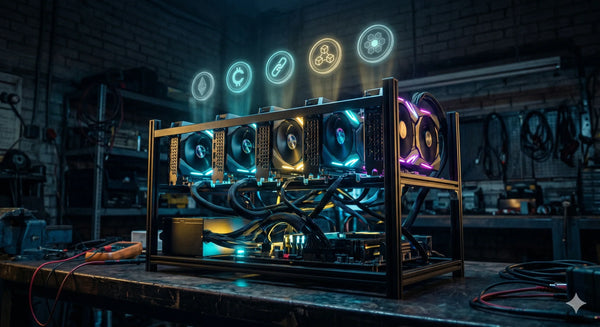
The halving is a Bitcoin-specific event — Litecoin has its own halving schedule, and most other mineable coins use different emission models entirely. If you're mining Litecoin and Dogecoin via Scrypt, Kaspa, or Alephium, the Bitcoin halving doesn't directly affect your block rewards.
However, Bitcoin's halving can indirectly move the entire crypto market. When BTC's price rises post-halving, altcoin prices often follow. Some miners use this dynamic strategically — diversifying across algorithms to hedge against the Bitcoin reward cut while still benefiting from any market-wide price appreciation.
The Bottom Line
The halving is not something that happens to you — it's something you plan for. Every miner who's been through one will tell you the same thing: the operators who survive are the ones who ran efficient hardware, managed their electricity costs, and didn't panic when revenue dropped overnight.
If you're running a current-gen machine on reasonable power rates, the halving is a speed bump, not a cliff. If you're running an older unit at $0.35/kWh and hoping the price will save you — that's a gamble, not a strategy.
Start with the right hardware. Browse our full range of Bitcoin ASIC miners ranked by efficiency. If you're not sure where to begin, our first miner setup guide takes you from unboxing to earning in a single afternoon.