What Is ASIC Mining?
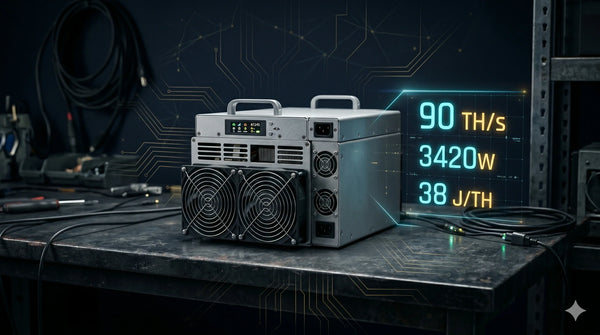
An ASIC (Application-Specific Integrated Circuit) miner is purpose-built hardware designed to mine one specific algorithm — and nothing else. The most common example is a SHA-256 ASIC for Bitcoin mining, but there are ASICs for Scrypt (Litecoin, Dogecoin), KaspaHash (Kaspa), Equihash (Zcash), and others.
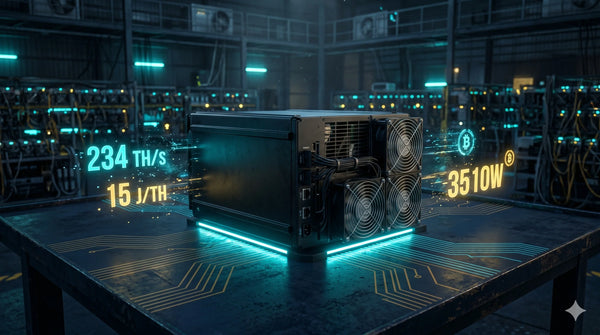
Because ASICs do one thing only, they do it with extraordinary efficiency. The best Bitcoin ASICs on the market in 2026 operate below 15 J/TH — a level of energy efficiency that no GPU rig can touch on the same algorithm.
Browse MinerHub's current ASIC miner range
What Is GPU Mining?
GPU mining uses graphics cards — the same hardware used for gaming and AI workloads — to mine cryptocurrencies. A typical GPU mining rig runs six to twelve GPUs on an open frame, drawing power through server-grade PSUs.
GPU rigs are flexible: you can switch between algorithms and coins at will, respond to profitability shifts overnight, and repurpose or resell the hardware if mining stops making sense. The tradeoff is that GPUs are never as efficient as a dedicated ASIC on any given algorithm.
Browse MinerHub's GPU mining hardware and rig accessories
Head-to-Head: ASIC vs GPU in 2026
Efficiency
This is where ASICs win decisively, and it's not close. A top-tier Bitcoin ASIC in 2026 operates at under 15 J/TH. A high-end gaming GPU mining the same SHA-256 algorithm would consume orders of magnitude more power per unit of hashrate.
For Australian miners paying 25–35 cents per kWh on residential tariffs, efficiency is everything. A less efficient rig at those electricity rates can push a mining operation into unprofitable territory even when Bitcoin's price is healthy.
Upfront Cost
GPU rigs have a lower barrier to entry in terms of getting started with individual components, but a fully built rig capable of meaningful output is not cheap. A six-GPU rig using current-gen cards, a quality frame, server PSU, and risers is a significant investment — and that's before running costs.
ASICs have a wider price range. Entry-level units for smaller networks can be very accessible, while flagship Bitcoin ASICs sit at the premium end of the market. However, on a cost-per-terahash basis, top ASICs often offer better value than GPUs for their target algorithm.
Flexibility
GPUs win this category outright. A GPU rig can be pointed at dozens of different coins and algorithms, reconfigured with software overnight, and adapted to wherever profitability is strongest at any given moment. If one coin's network difficulty spikes or its price drops, you pivot.
ASICs are locked to their algorithm forever. A SHA-256 Bitcoin ASIC cannot mine Kaspa or Ethereum Classic. If the network you're mining becomes unprofitable or the algorithm falls out of favour, your options are limited: sell the hardware, hold it, or continue at a loss.
Resale Value
GPUs retain broad resale demand because they have uses outside mining: gaming, machine learning, video editing, and AI inference all consume GPU compute. In a bear market, a GPU can often be sold to a gamer or creative professional.
ASICs only have value to other miners. In a prolonged bear market or following a major network shift, ASIC resale value can drop sharply. Newer, more efficient generations also tend to make older units obsolete faster.
Noise and Heat
Both generate significant heat and noise, and neither is suitable for a bedroom or open living space without serious acoustic and thermal management. That said, high-end ASICs tend to be louder than GPU rigs at full load — industrial axial fans running at full speed are a common feature. A well-managed GPU rig with aftermarket fan curves can be more manageable in a shed or garage setup.
Which Should You Choose in 2026?
Choose an ASIC if:
You want to mine Bitcoin (or another ASIC-dominated network) and efficiency is your primary concern. You're comfortable with hardware that has one purpose and will hold that asset long-term. You have a suitable space — a garage, shed, or commercial premises — where noise and heat can be managed.
A Bitcoin ASIC running at sub-15 J/TH with access to reasonable Australian electricity rates and a well-configured pool is about as close as you can get to a set-and-forget mining operation.
Browse current Bitcoin ASIC miners
Choose a GPU rig if:
You want flexibility across multiple coins and algorithms. You're interested in mining newer or smaller-cap proof-of-work networks that don't yet have dedicated ASICs. You want hardware that has resale value to non-miners. You're getting started and want to learn the fundamentals of mining without committing to a single network.
GPU mining in 2026 is harder than it was in the Ethereum era, but it's not dead — Kaspa, Alephium, and other GPU-mineable networks still exist and can be profitable depending on your electricity rate and hardware.
Browse GPU mining rigs and accessories
A Note on Australian Electricity Rates
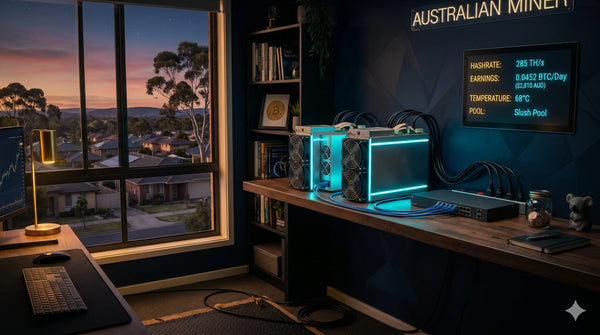
This matters more than almost any other factor in your decision. Australia's residential electricity rates — typically 25 to 35 cents per kWh depending on your state and retailer — are among the highest in the world for mining. This means the efficiency gap between ASICs and GPUs is felt much more acutely here than in regions with cheap power.
Before purchasing any hardware, run your numbers through a mining profitability calculator using your actual electricity rate, not a global average. A unit that's profitable at 8 cents per kWh in parts of the US may be deeply unprofitable at your Australian tariff.
Need help choosing hardware for Australian electricity costs? Contact the MinerHub team
Final Word
In 2026, ASIC mining is the clear choice for Bitcoin and established proof-of-work networks where efficiency drives everything. GPU mining retains a place for miners who value flexibility, want to explore newer networks, or need hardware that holds non-mining resale value.
The worst outcome is buying the wrong tool for your goals. An ASIC miner purchased for a network that pivots to proof-of-stake, or a GPU rig pointed at a SHA-256 algorithm competing against industrial-scale ASIC farms, will underperform and frustrate.
Know your algorithm. Know your electricity rate. Know your exit options. MinerHub stocks both — and the team is happy to help you work through the numbers before you commit.